
Virtual Reality for Language Learning 2.0
Step inside the language.
VR4LL builds virtual environments made for language classrooms: shared worlds where a whole class talks, solves and negotiates together. Free to download. Free to learn to teach with.

- Erasmus+ · Seven partners, five countries
- Original VR4LL: ELTons Innovation Awards finalist, 2022
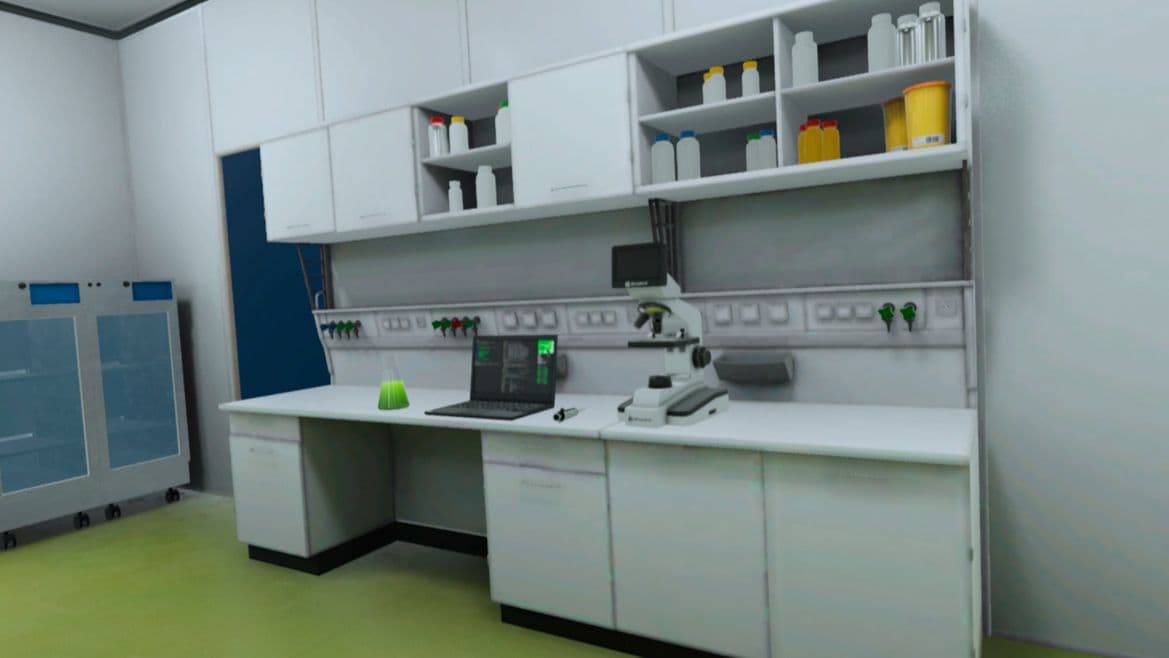
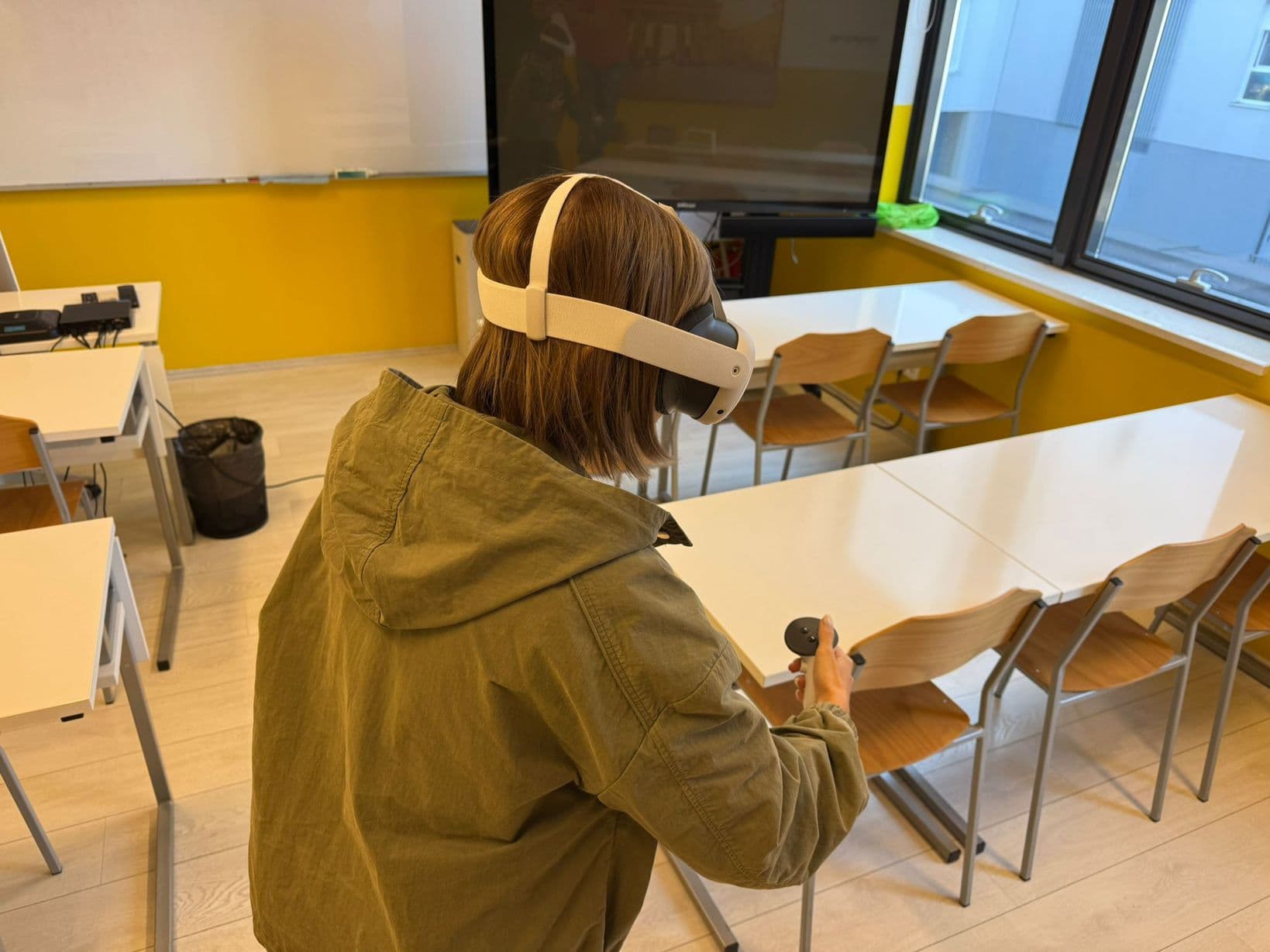
Inside: the Science Lab. Outside: a classroom that talks it through.
I want to try it
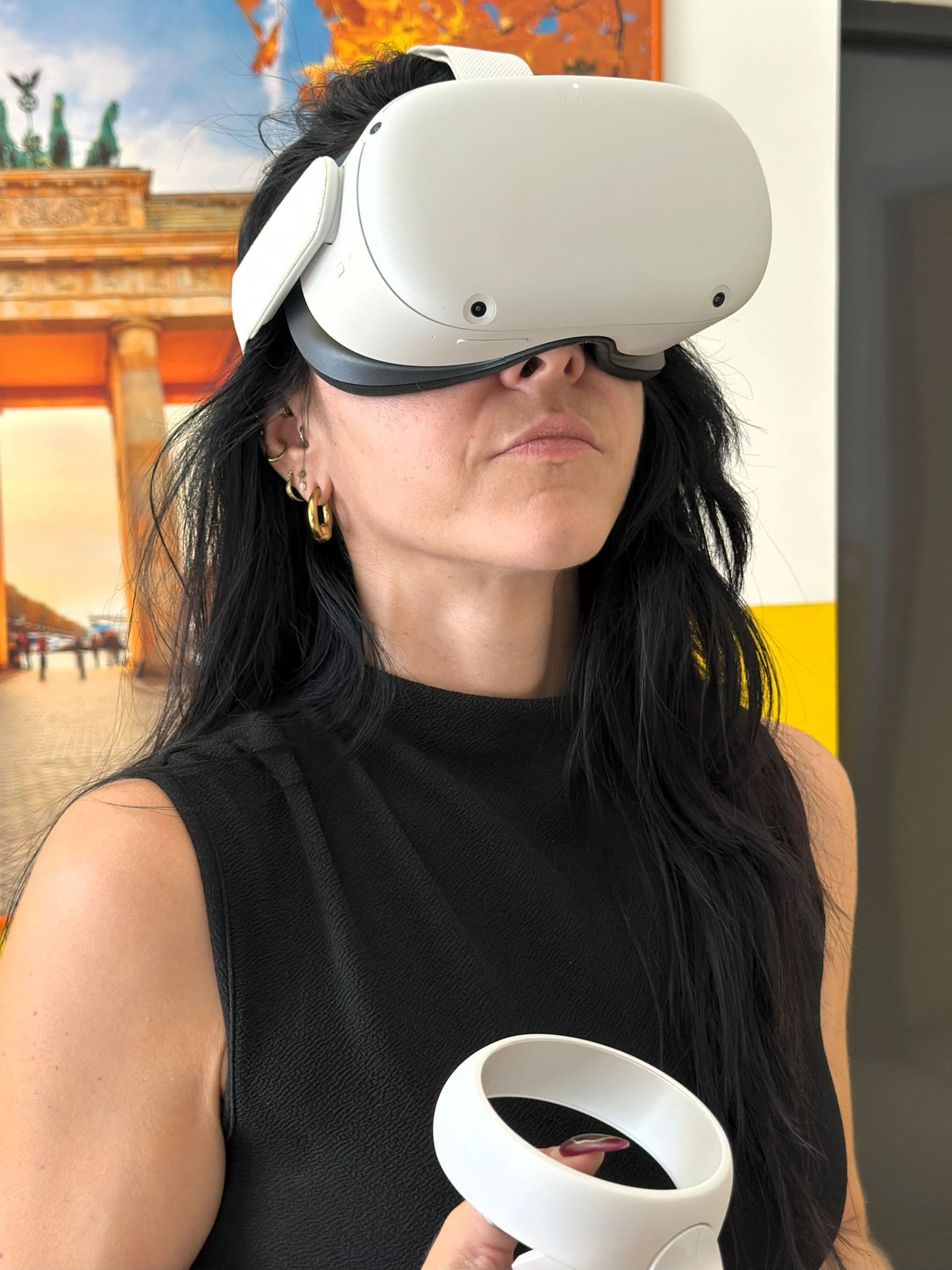
The apps are free for Meta Quest 2 and 3: no licence, no cost. See what is in each of the five environments, and watch the walkthroughs before you put a headset on.
See the environmentsI want to teach with it
Our free course shows you how to build a real lesson around a VR session, including what the students who aren’t wearing a headset are doing, which is where most of the language learning happens.
Five environments, two free apps
Three worlds to work in together. Two stories to solve together.
The Science Lab
Handle the equipment, run the experiment, say exactly what you mean.
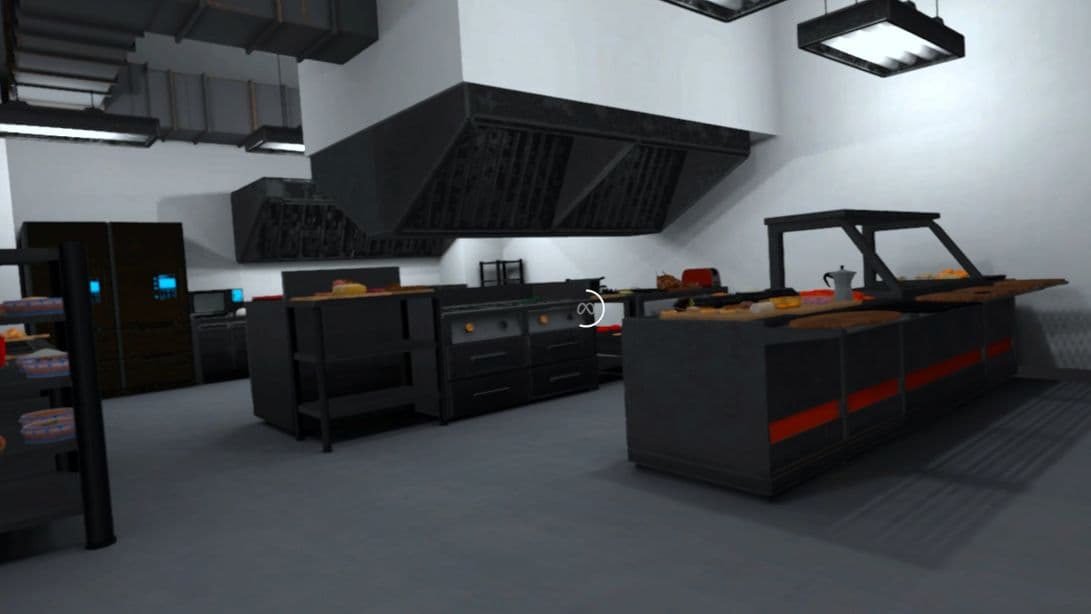
Restaurant & Bar
Cook it properly, then talk it over at the bar.
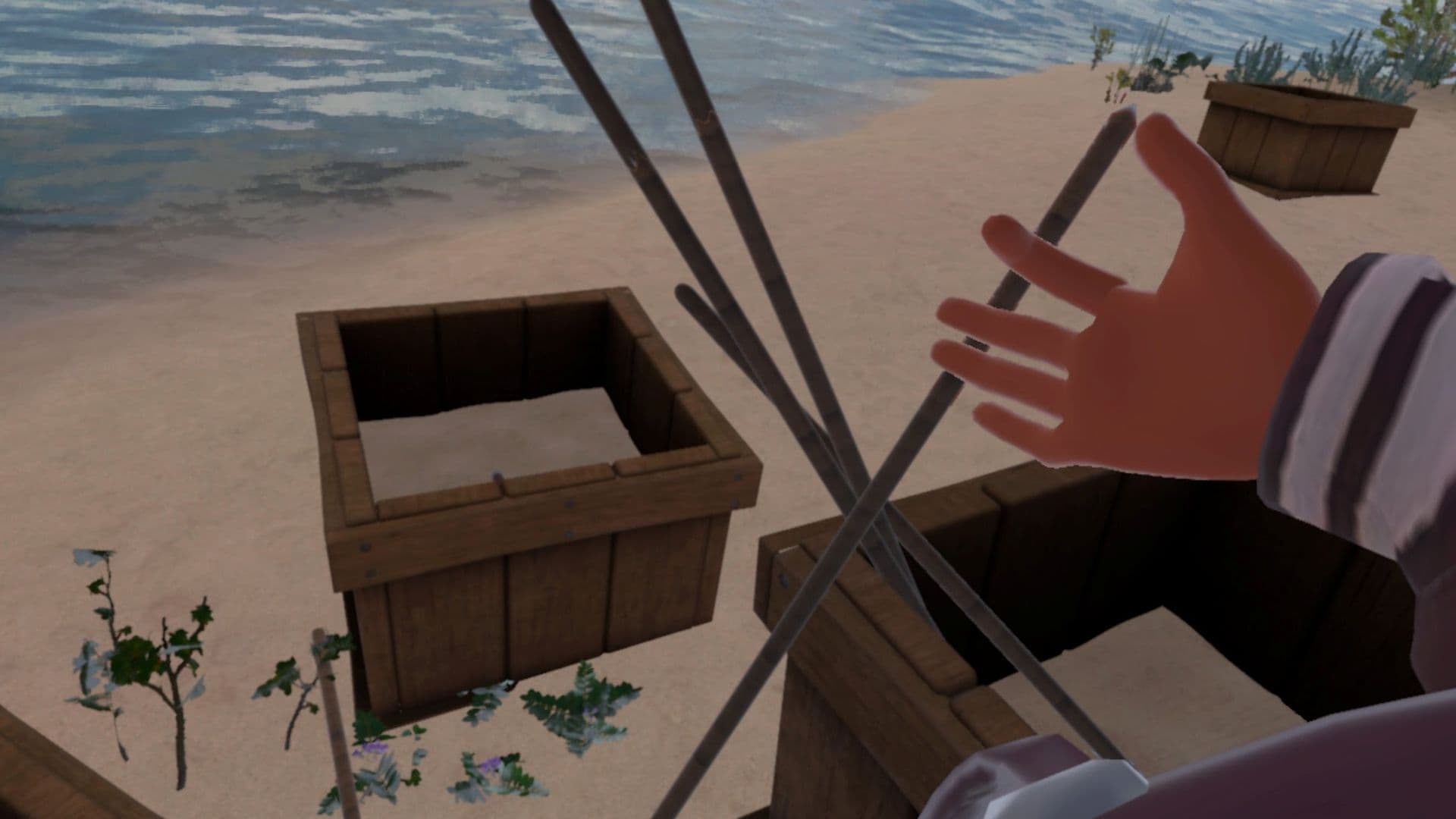
Outdoor Survival
Plan, decide, survive, then tell the story around the fire.
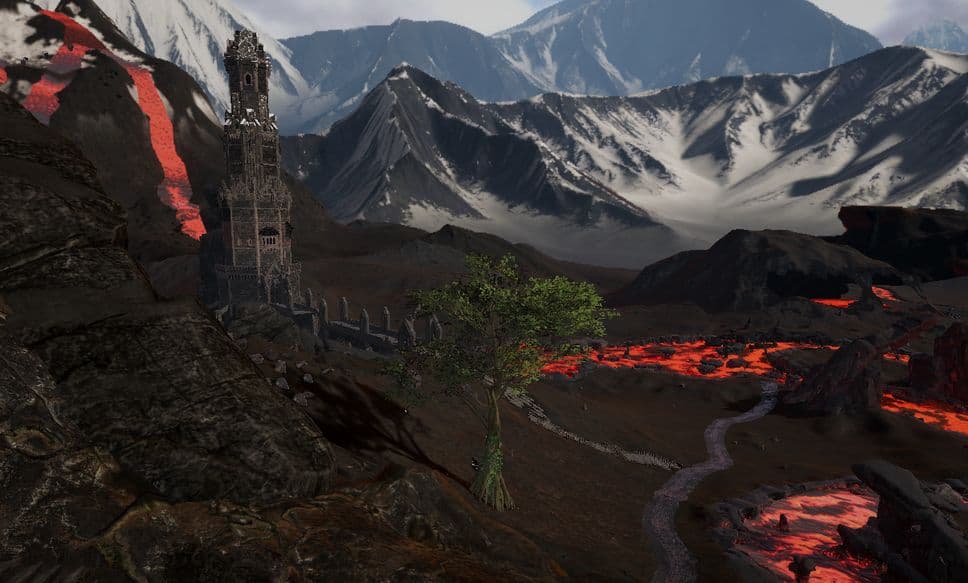
A Game of Phones
Read the hacked messages aloud. The class solves what you can’t.
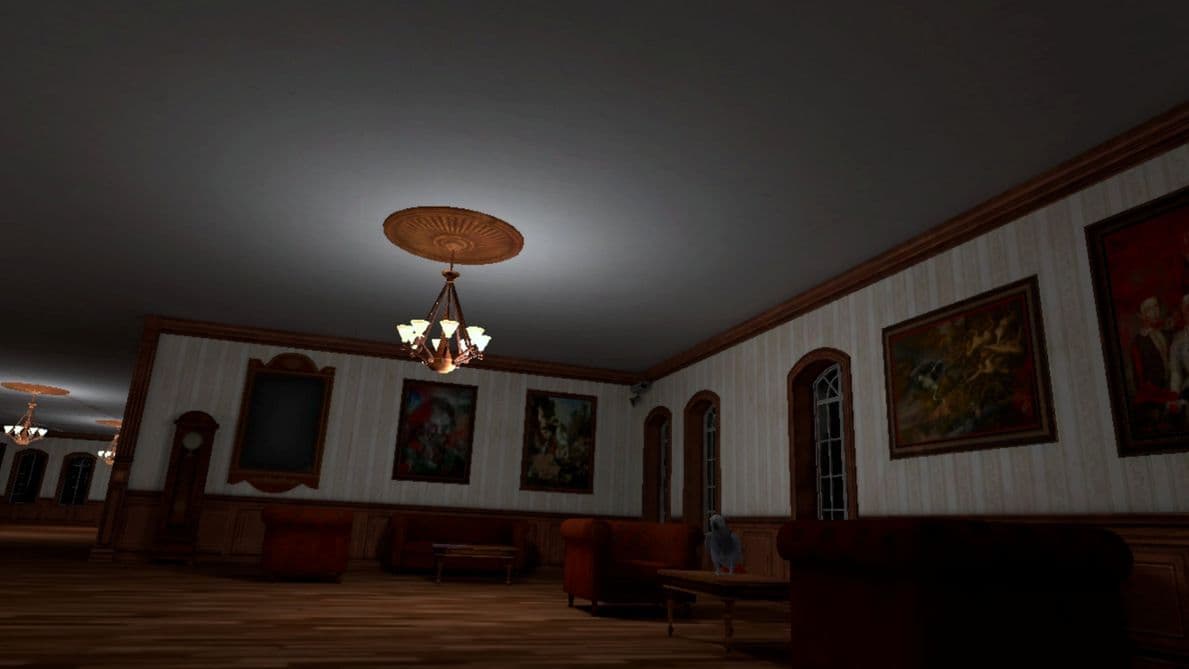
The Burglar Puzzle
Follow the clues through the mansion and name the mastermind.
How a VR4LL lesson works
A VR4LL lesson has three parts.
The headset is on for fifteen minutes. The lesson is an hour. Here’s how the hour works.
- 1
Prepare
For example, minute 0–15
Build the vocabulary, the schema and the confidence students need before the headsets go on. Fifteen minutes here changes what the VR session is capable of producing.
- 2
Experience
For example, minute 15–40
Some students explore the VR. The rest of the class takes assigned roles and drives the session from outside. Everyone is speaking, listening and negotiating throughout.
- 3
Extend
For example, minute 40–60
Consolidate the new language through production tasks: retelling, writing, debating, roleplay, while the shared experience is still vivid.
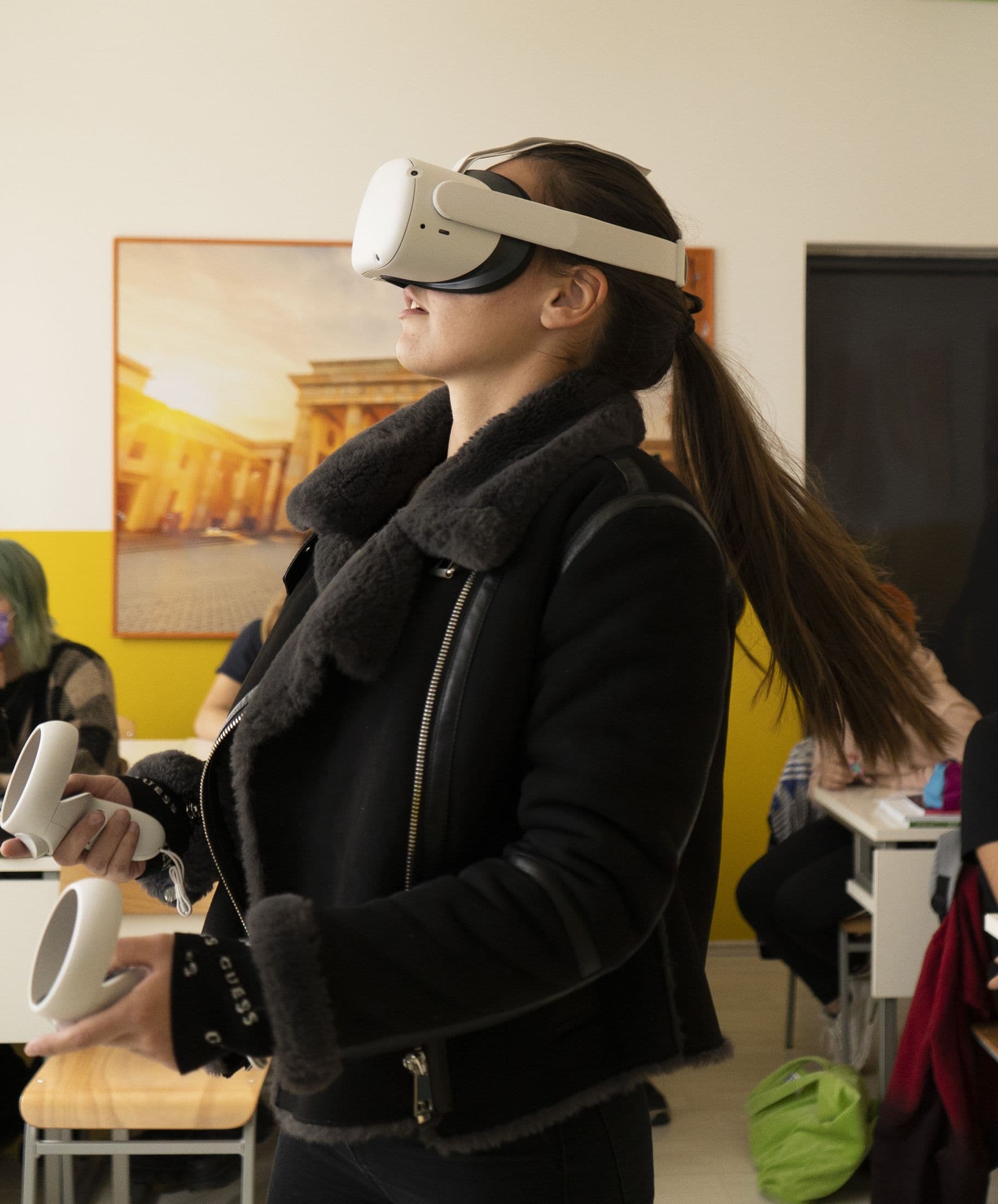
Inside: A Game of Phones. Outside: the class reads, listens and solves.
Why it works
The task creates the need to speak.
Immersion aids retention
A shared audio-visual experience gives new language something concrete to attach to.
Context forces precision
Students describe what they can actually see, not what a textbook told them to say.
Language happens without prompting
The task creates the need to speak, so the teacher stops being the cue.
Motivation goes up and stays up
Students want to finish the puzzle. Finishing it requires talking.
It’s genuinely collaborative
The environments are built for groups, so nobody sits and waits.
Since 2019
This isn’t a first attempt.
The original VR4LL project produced four single-player virtual worlds, published them free on the Oculus Store, and put them into real classrooms. Schools adopted them internationally. The technology turned out to work unusually well for learners with certain learning difficulties. The project was shortlisted for the ELTons Innovation Awards.
Then teachers told us what they actually wanted: more people in the world at once, and richer places to put them. That’s what VR4LL 2.0 is.