
Teacher training
The headset is the easy part.
A free online course that turns a fifteen-minute VR session into a full language lesson, including what the other twenty students in the room are doing while one of them is wearing the headset.
Self-paced · No prior VR experience needed · You don’t need to own a headset to begin
- Cost
- Free
- Format
- Self-paced and online, on Moodle
- Structure
- Six modules, each in three parts: Learn, Practice and a short Test
- Includes
- Coursebook-style reading, interactive activities, video demonstrations, lesson planning tools
- You need
- Nothing. No prior VR experience, and no headset to start with
Outcomes
By the end, you’ll be able to
- Set a headset up for classroom use: boundaries, lobbies, and mirroring to a screen the class can see
- Choose the right environment for your learners’ level and your objectives
- Plan a lesson using the Prepare / Experience / Extend structure
- Assign roles that keep the whole class working, not just the student in the headset
- Adapt a session for motion sensitivity, anxiety, attention difficulties, dyslexia, advanced learners and multilingual classes
- Build CLIL, soft skills and green skills into a language lesson without losing the language
- Assess and give feedback on what actually happened during a VR session
What’s in the course
Six modules, from switching the headset on to writing your own lesson plans.
- 1Introduction to VR in language learning
- 2Technological requirements, guidelines and instructions
- 3Virtual Learning Environments: guidelines
- 4Virtual Escape Rooms: guidelines
- 5Supplementing VR lessons with additional materials and activities
- 6Exploring learning possibilities and creating lesson plans and ideas
The method at the heart of the course
Prepare, Experience, Extend.
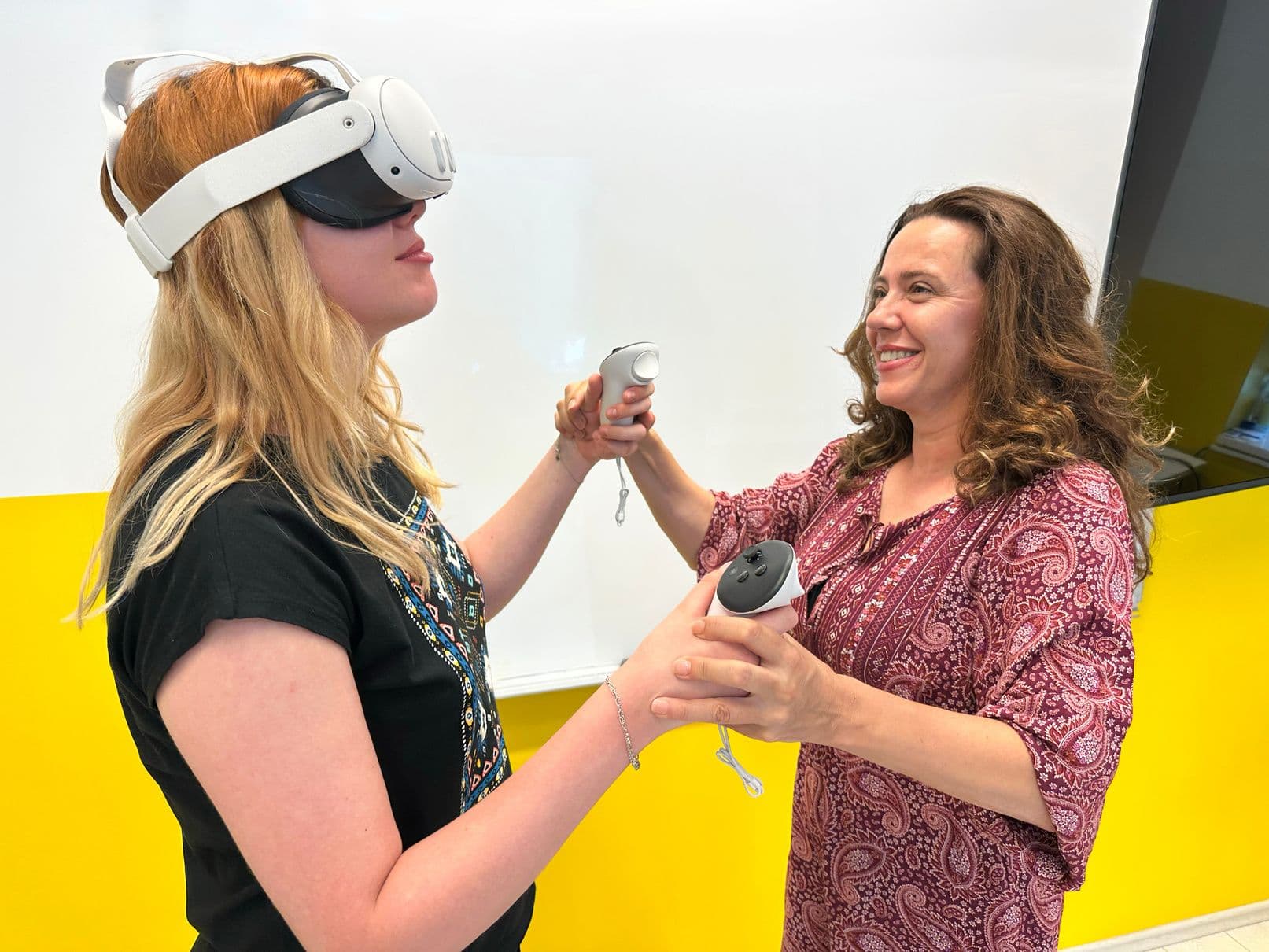
The course is built on the same three-part lesson every VR4LL environment is designed for. The headset is only the middle of it.
- 1
Prepare
For example, minute 0–15
Build the vocabulary, the schema and the confidence students need before the headsets go on. Fifteen minutes here changes what the VR session is capable of producing.
- 2
Experience
For example, minute 15–40
Some students explore the VR. The rest of the class takes assigned roles and drives the session from outside. Everyone is speaking, listening and negotiating throughout.
- 3
Extend
For example, minute 40–60
Consolidate the new language through production tasks: retelling, writing, debating, roleplay, while the shared experience is still vivid.
The video series
Four training videos.
Watch them here, or take them in sequence as part of the course.
Video 1
Planning a VR lesson
How a VR session fits into a whole lesson, from objectives to the tasks around the headset.
Video 2
Technical preparation for VR lessons
Getting headsets, boundaries, lobbies and screen mirroring ready before the class arrives.
Video 3
Briefing and debriefing students
What to tell students before the headsets go on, and how to turn the session into language afterwards.
Video 4
Teacher feedback and experiences
Teachers talk about using VR4LL with their own classes: what worked and what they would change.
Start now, headset later.
The course is free, it’s self-paced, and it’ll still be here when your school buys one.
In person, in Split
Prefer a week with a trainer?
The project coordinator, Jantar – International House Split, runs a six-day course for teachers, VR in the Language Classroom, in Split. Schools can fund it through Erasmus+ (KA1) staff mobility.
See the course on erasmus-croatia.com