
Methodology
VR = TPR.
Total Physical Response asks learners to answer language with their bodies. Virtual reality gives them a whole world to answer with. That idea is where VR4LL started, and it is still at the centre of every environment.
- Hearan instruction
- Dowhat it says
- Saywhat happened
Total Physical Response
Language you do before you say.
Developed by the psychologist James Asher in the 1960s, TPR connects language with movement: the teacher gives an instruction, the learner carries it out. Understanding comes first; speaking follows when the learner is ready.
Movement meets language
Physical movement is connected with verbal language, so words are anchored in actions.
The way children learn
It mimics the way children acquire their mother tongue: listening and doing long before speaking.
Less stress
It reduces stress and anxiety: learners show they understand by doing, not by producing perfect sentences.
Vocabulary and listening
It is effective for acquiring new vocabulary and improving listening skills.
For every level
It suits all levels, and especially beginners in language learning.
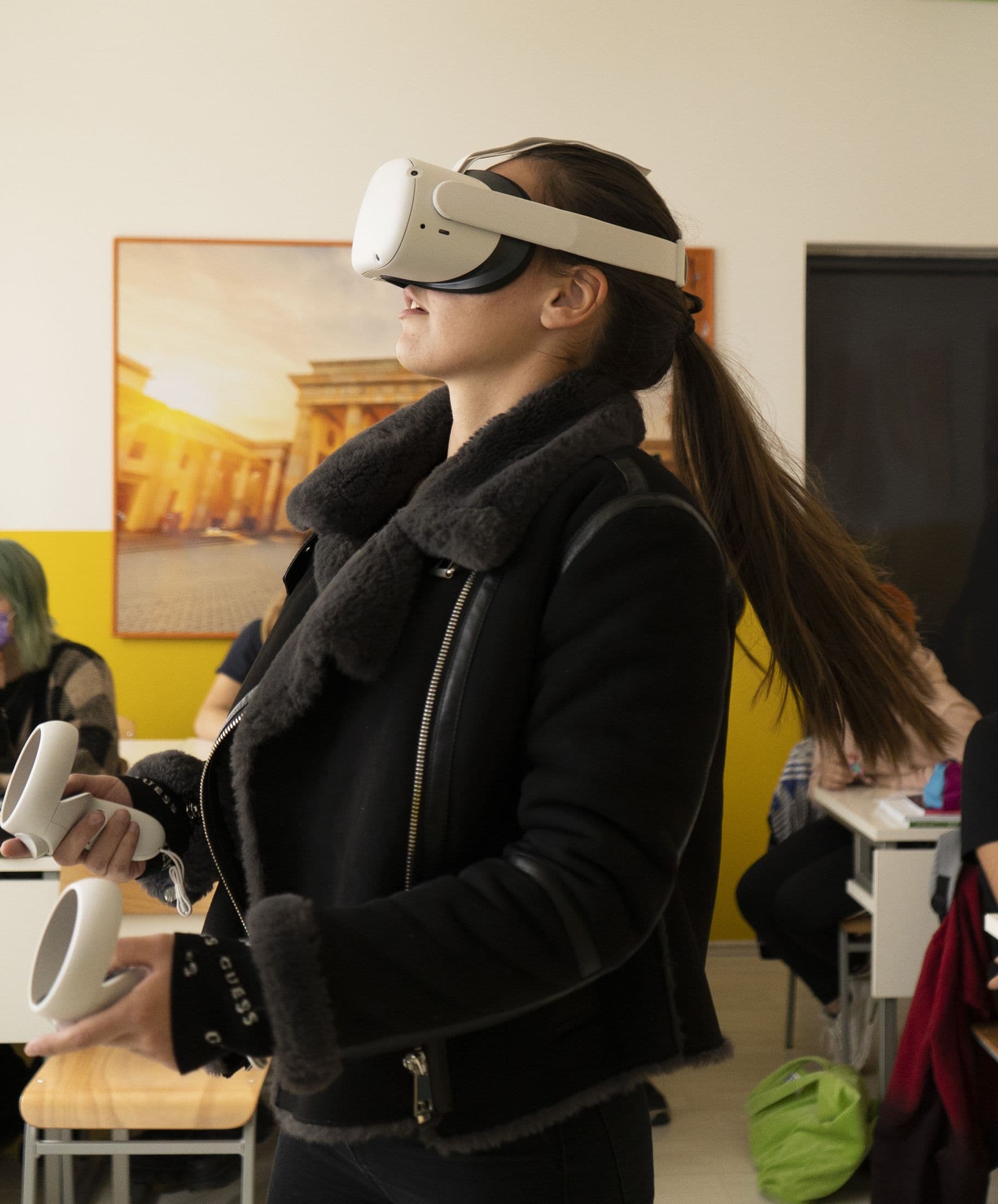
Why VR works for TPR: in a headset, learners physically move, pick up objects and gesture. The instruction and the action happen in the same place, so the language has something real to attach to.
Try it
Five instructions. Follow them.
This is the kitchen of Restaurant & Bar, flattened into your browser. Read or listen to each instruction and click the right thing. Then switch language, or hide the text and work by ear alone.
Turn on the stove.
Click the right thing in the kitchen.
- Step 1
- Step 2
- Step 3
- Step 4
- Step 5
Step 1 of 5
“Hear it” uses your browser’s own voice; voices and languages differ between devices.
Four methods, five environments
TPR is the centre. Three more methods do the rest.
Pick a method, then an environment, to see how it shows up in the apps.
Total Physical Response
Learners respond to language with their bodies: they hear an instruction and carry it out. Movement and meaning arrive together, and the memory holds both.
In VR, learners physically move, pick up objects and gesture, which strengthens language acquisition and memory.
How much of it in each environment
The Science Lab
Students grab equipment, combine materials and watch what happens, and they have to say what they intend to do before they do it.
Experiential and collaborative
One student in the headset. The whole class at work.
Most of the language in a VR4LL lesson is spoken outside the headset. Every student has a job; pick one to see what it sounds like.
in VR
Outside the headset
Navigator
Guides the explorer through the space.
The language it produces, for example
- “Turn left. No, your other left.”
- “Walk towards the window.”
- “Stop. Look down.”
Putting it together
Prepare, Experience, Extend.
The methods meet in one lesson. The headset is on for fifteen minutes; the hour is built around it.
- 1
Prepare
For example, minute 0–15
Build the vocabulary, the schema and the confidence students need before the headsets go on. Fifteen minutes here changes what the VR session is capable of producing.
- 2
Experience
For example, minute 15–40
Some students explore the VR. The rest of the class takes assigned roles and drives the session from outside. Everyone is speaking, listening and negotiating throughout.
- 3
Extend
For example, minute 40–60
Consolidate the new language through production tasks: retelling, writing, debating, roleplay, while the shared experience is still vivid.
Inclusive by design
Showing, not only telling.
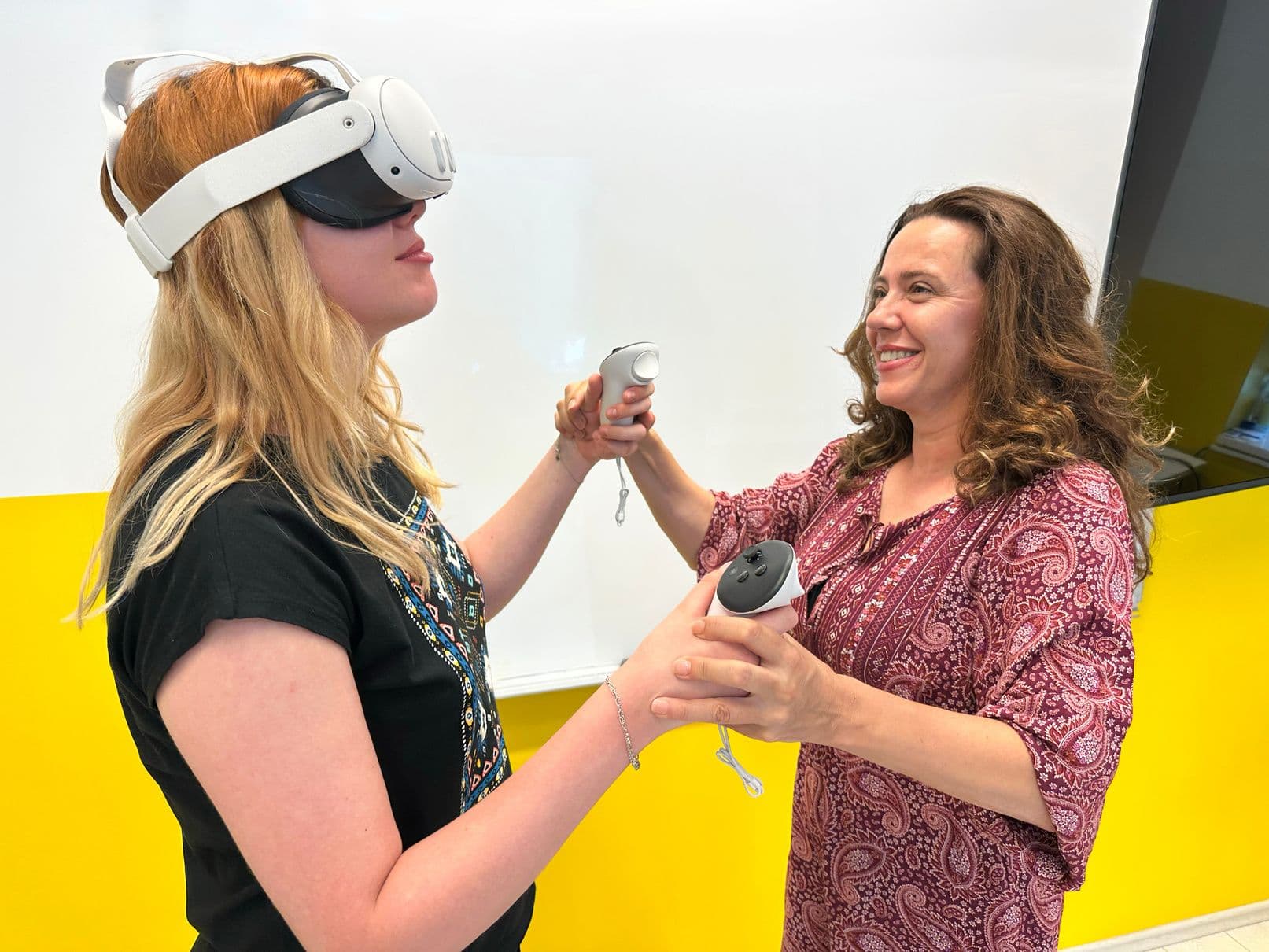
Because learners can show they understand by doing, TPR lowers the pressure to produce perfect sentences. In the first VR4LL project the approach proved unexpectedly effective for learners with several kinds of learning difficulty.
The teacher course covers how to adapt a session for motion sensitivity, anxiety, attention difficulties, dyslexia, advanced learners and multilingual classes.